Tony’s Take: Come Sing for the Harrowing (2026 Version) by Dan Coxon
A superb collection of uncanny short stories
with a powerful Folk Horror influence
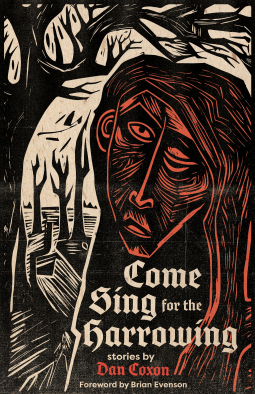
Dan Coxon is a fascinating short story specialist whose impressive body of work straddles the supernatural, the uncanny, the weird and Folk Horror. His great strength lies in the fact that he’s impossible to pigeonhole, with his work effortlessly encapsulating odd events which occur in daily life, threats the countryside holds, odd trips into historical fiction, families in crisis, strange encounters and, of course, the occasional creature. Coxon uses subtlety before bangs, often smoothed over with a level of reflection and melancholia, raising his work above genre writers and edging towards more literary areas.
If you’ve never experienced this author, Come Sing for the Harrowing is an excellent place to start, however, you could also backtrack to Only the Broken Remain (2021) which includes many of his best stories from across the previous two decades. Coxon had a huge collection to choose from, having over fifty published by the time his first book was released. Given the quality of his short work, it’s no surprise he’s an anthology editor of some note, including Out of the Darkness (2021) and Isolation (2022) and Writing The Uncanny (co-edited with Richard V. Hirst) which won the prestigious British Fantasy Award for Best Non-Fiction, 2022. Later in 2025, for his editing duties, Coxon won another British Fantasy Award for Heartwood: A Mythago Wood Anthology.
Come Sing for the Harrowing was originally released in 2024 by a publisher which shortly afterwards ceased trading, with the book barely on sale before it sadly disappeared. This was a great shame as this quality read deserves significantly more exposure, which this CLASH Books re-release should give it.
Folk Horror is clearly a subject Coxon likes to revisit, it plays a significant role in Only the Broken Remain and also his micro-collection Green Fingers (2020) and returns with some style in Come Sing for the Harrowing. Coxon enjoys blurring the edges of horror and this is what makes this collection so intriguing, the sheer unpredictability of what the next story might usher in. Prepare for often strange and unexplained snapshots where the unsuspecting reader is dropped into unnerving situations without having an inkling of the bigger picture. On other occasions the story takes a neat side swerve, such as in the excellent “A Broken Vessel”, which opens with a hard boiled crime vibe, but that’s before the screaming starts.
Dan Coxon savours dancing around the Folk Horror boundaries in Come Sing for the Harrowing, but his book stretches into other realms which don’t require monsters, violence, or jump scares to raise the tension. In one of my favourite stories, “The Darkness Below”, a sly grin and a wink was enough to give me the shakes. Written in an Edgar Allan Poe confessional style, a man takes his family to local beauty spot, the Cheddar Gorge, and whilst inside the cave complex loses sight of his son for a few minutes and believes he’s changed in some way. If you have kids, this story in particular will have you twitching. I also loved “Long Gone (Slight Return)” which harks back to the grunge musical era of the nineties and a series of interviews ruminating over the disappearance of a musician, the uncanny mutters in the background, which perhaps do not exist at all.
The title story “Come Sing for the Harrowing” has one of the most prominent Folk Horror vibes, with strong Wicker Man overtones, with Jack being recruited for seasonable work at Historytown, where he is part of a working farm exhibit. I had a feeling this one was not going to end well for poor Jack. The early stories continue with Folk Horror overtures, with “The Wives of Tromisle” concerning an island with its own weird rules and “Bring Them All into the Light” about the rediscovery of an ancient god. The manner in which this story was framed was terrific, a family leave the big city and buy a dilapidated house which begins to influence the father to renovate (to extreme measures). Similar influences bubble under the surface in the haunting “From the Earth”, with the countryside and bored children looming in “Bumblehatch”.
Coxon occasionally revisits the theme of family and broken relationships, with “Clockwork” being a fine example. A man prepares for the funeral of his father, the reader can tell they had a difficult relationship as when asked for any final words at the cremation his response is “Tell him he can fuck off.” The story then quickly veers into bizarre territory when the man begins to uncover objects in his garden, which he connects to his father. “In Flickering Light” details a strange occurrence whilst a film in being shot and the ripple effect it has had the years, whilst “Gorphwysfa” blends two narratives years apart, but connected by the same location.
As I live in the Streatham area of London, I enjoyed “Grains of Sand”, set a stone’s throw away in Brixton. A shop security guard is much more than he seems as he searches for something or someone from his ancient past. “London Deep” imagines there are creatures living in the subways under London, framed around two brothers who have little in common until one vanishes and the other investigates. Stylistically this story is a strong example of Dan Coxon’s style, it would have been very easy to dive into Humanoids From the Deep invading fish monsters, instead restraint is employed to great effect and the reader is left wishing there were more answers jumping out of the rain sodden shadows.
Both stories new to this edition fit into the existing mood and themes like a glove and are fine additions. “Our Sister of Blackthorn” concerns a successful crime podcaster returning to the rundown housing estate to interview a former friend about the disappearance of a mutual friend when they were teenagers. From the first page you know things will not end well. “Needles and Pins” had plenty of funny and uncomfortable moments before heading into darker territory. A group of young men go camping and drinking, the narrator is attracted to the young woman who works there and spies her dancing around naked in a nearby river. You should have stayed in the tent!
Of the eighteen stories, eleven had been previously published in magazines and anthologies, these include Great British Horror 7, Shakespeare Unleashed, BFH Horizons, Unspeakable Horror 3, Beyond the Veil and Terror Tales of the West Country. By ways of comparison points of reference are tricky, however, stylistically the late Joel Lane and Gary Budden are two excellent genre-bending places to start. There is much to enjoy in this excellent collection from sinister moments to occult rituals with nods to old gods and the darkness which ripples beyond the veil. Coxon is a master of turning the mundane on its head, often via family situations, before seamlessly filtering in his own unique brand of darkness.
Tony Jones
Vibes: 4.5 / 5