Rich’s Take: Honey by Imani Thompson
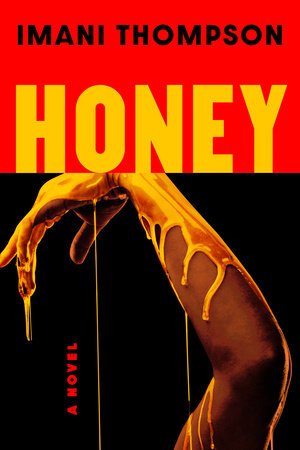
Honey follows Yrsa, a PhD student who is growing increasingly bored and fed up with her life - whether it be her dissertation, the lackluster men in her life, or entitled students in her class who can’t handle having their opinions challenged. She faces an almost constant barrage of racism and misogyny throughout the novel, both directly and through situations she observes. So when her friend confides in her about a problematic professor, Yrsa’s finally had enough. When she finally runs into the professor, a seemingly innocuous gesture from Yrsa results in his death. This encounter ignites a thrill in her that she spends the rest of the novel chasing, turning her intellect and desire for justice against problematic men.
Imani Thompson tackles issues of race, sex and violence in Honey by subverting the traditional serial killer narrative and the result is a compulsively readable novel that is both entertaining and asks readers to critically reflect on the themes woven throughout. Honey couldn’t have come at a more perfect time, especially as people who harbor racist and misogynistic beliefs feel emboldened to be more outspoken in public forums like the vapid world of “manosphere” influencers. These types of creators are just one of the types of gross men that find themselves brought into Yrsa’s fieldwork, along with those who abuse their positions of authority or fetishize her based on her race. While Yrsa’s methods of liberation may be drastic, it confronts the reality that men like the characters in Honey don’t just exist in the realm of fiction and they also often escape any kind of consequences or condemnation.
One of the fascinating things about Honey is that it chronicles Yrsa’s journey into becoming a serial killer in ways that feel familiar, but simultaneously breaks from traditional portrayals. Yrsa derives a thrill from carrying out her murders and chases that high as most serial killers do, but there’s almost a complete detachment from the men she targets. While Yrsa isn’t meant to be a strictly “likable” character, she is highly intelligent and often seems bored by her students' surface level arguments. Aside from weaving her killings into her academic work as a real-world workshop, I feel like Yrsa loved the intellectual challenge of planning her killings. Her methods were largely “hands off”, where she could easily remove herself from the choice of physical violence, except for one instance where her emotions took over. Those depictions of her preparation indicate an attraction to the stimulation of accounting for every possibility and outsmarting various detection methods, even when directly confronted. She also seems to thrive in uncomfortable situations and will often seek to insert herself in them.
Honey’s concept hooked me immediately, but my appreciation of the novel deepened because of some of Thompson’s stylistic choices, especially around the depiction of violence. The details are often left largely to the reader's imagination, even when Thompson places the reader right in the murder scene. I think of a particular scene where Yrsa’s reflecting on a kill through rapid fire memories of sound in the moment and it’s laid out like a poem about brutality. Letting those sensory details do the heavy lifting make for a more visceral, lasting reaction. I also loved how Thompson would use short sections within chapters to increase pacing or in some instances, help the reader feel like they are recalling memories the same way Yrsa would.
Honey is a debut that received a lot of pre-publication hype and not only lives up to it, but exceeds it. I loved how Thomspon utilized genre fiction tropes and framework to deliver timely and thought-provoking messages and Honey is easily one of my favorite novels of 2026. I look forward to following Thompson’s career because I have a feeling we will be hearing her name a lot more in the coming years.
Vibes: 5 / 5