Rich’s Take: Doe by Rebecca Barrow
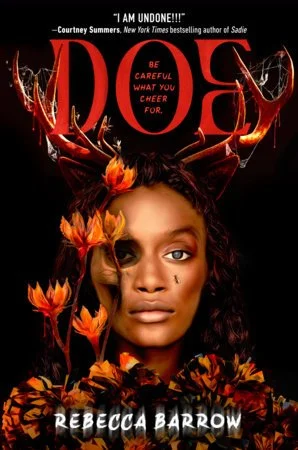
Maris Larsen is the captain of the West Eaton High School cheer squad whose only desire is to be the best. Her drive and focus on cheer and becoming a leader the other girls admire causes her grades to suffer and puts her at odds with her Coach. Coach isn’t the warm, maternal mentor Maris wishes her mom could be, but she’s the only person who wants her to succeed and sees any kind of potential in her. Maris is a dreamer, searching for fancy apartments in a list of all of the exotic or ritzy places she can think of - Manhattan, Paris, Rome and Barcelona. She dreams of getting a fancy title and escaping the banality of West Eaton High and the pressure of caring for her mother. Coach’s belief in her and her captaincy are the things she clings to as validation of the trajectory she sees for herself. Which is why when Coach announces the arrival of her former star student Genevieve Ray on the team, Maris’ world feels like it's crumbling around her.
As Maris and Genevieve battle for supremacy, Maris is desperate to come out on top no matter the cost. Which is why she isn’t afraid when a monstrous being in the shape of deer visits her during her sleepwalking episodes. They form a bond and during one of their many conversations Doe offers her a surefire way to come out victorious in her ongoing rivalry with Genevieve. But everything comes with a price, and Maris must decide if she can live with the cost.
After reading Shane D. Keene and Stephanie Ellis’ Mason Gorey: A Haunting Catskill Elegy a few years ago and now Doe, I am starting to think novels in verse are the perfect format for certain stories, especially in Horror. Lines like this are just one of the many reasons why:
“But tonight, we drive.
October air crisp
through open windows
the road unspooling before us
like it could go on forever
like we could drive and drive
music up and bodies humming
the horizon always on its way
never quite finding us”
Rather than sentences of exposition, Barrow taps into a sense of emotion that resonates with anyone who remembers being a teenager - young, invincible, alive. Then there’s this portrayal of the entity known as “Doe”:
“Without those binds
it can only imagine the delicious screams it would coax
from the humans.
At its sheer size, mass, dark velvet flesh and
crown of antlers
looped with the silk of spiders
home for the creatures that roam
the deer’s flesh, slip
in and out of pockets of
rot.”
It also allows Barrow to introduce readers to a large cast of characters through the use of descriptive language that focuses on personality traits to make them easier to remember. An example is how August and Prairie have the lockers next to Maris, so they’re Maris’ closest allies and envied by the other girls on the team. It also places them atop the hierarchy of the cheer squad. Another great example is when Barrow uses Doe's telepathic powers to introduce readers to the girls that originally found her back in 1973 through their deepest secrets. Like Dawn and the pain in her ribs that hint at an abusive childhood or Crystal, who returned to an empty home and realized she was abandoned by her family. I loved these approaches to characterization because the images Barrow paints through her verses work well on their own, but they also encourage interaction from readers and jumpstart readers' imaginations. I think that was one of my favorite things about Doe, that the reading experience felt more interactive than traditional prose novels.
The structure of Doe and the emotional depth of Barrow’s verses also lend a kinetic pace to the story that keeps readers engaged. In some instances, this pace directly complements the scenes, like when the cheer team is practicing. The focus on active language and the short, punchy verses conveys the energy of a cheer performance and the physical exertion the girls put themselves through in order to be the best. The one thing that never changes though is Barrow’s ability to keep readers addicted to the story and coming back for more, if they don’t finish it in one sitting.
Doe initially seems like it might be your standard “evil entity torments small-town” story, but the reality is something so much more rich and complex from both a plot and character development standpoint. It would’ve been easy for Barrow to lean into reader expectations - especially given the nightmarish appearance of the entity known only as “Doe” - and create a being that serves only to terrify and torment Maris and the rest of the cheer squad. Instead, Barrow weaves a sorrow-filled backstory for Doe which humanizes her as a character and generates a lot of empathy from the reader. That same complexity is also applied to the rivalry between Maris and Genevieve.
Without spoiling too much of their dynamic, it was interesting as a reader to see that despite each girl focusing on the differences of the other, they were very, very similar. This wasn’t strictly a case of “Mean Girl joins cheerleading squad”, but rather two talented cheerleaders who struggle with self-doubt or security in who they are as individuals. Which also ties into the rest of the cheerleading team. It was refreshing to see Barrow reject traditional stereotypes and instead of having the cheerleaders be at the top of the social hierarchy, they were seen more as the outcasts within their school. The girls are all poor/working class just trying to survive and the cheer team is everything to them, giving them a sense of family that many of them crave.
This was the first novel I’ve read from Barrow - who primarily works in the YA genre - but it certainly won’t be my last! Doe is a novel full of bold choices, memorable characters, and a fresh take on Folk Horror that’s sure to thrill any Horror fan and will certainly be on my “Best of” list at the end of the year.
Vibes: 5/5