One Voice Could Be So Loud: Imani Thompson and Utilizing Genre Tropes to Deliver Thought-Provoking Messages
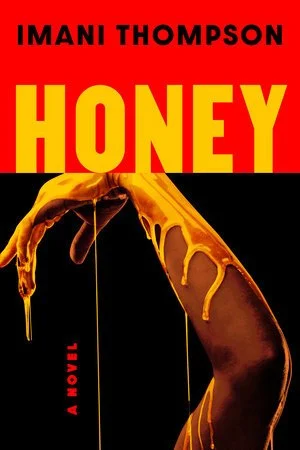
I’m absolutely thrilled to announce Imani Thompson as our first guest in the “One Voice Can Be So Loud” series! Imani tackles issues of race, sex and violence in Honey by subverting the traditional serial killer narrative and the result is a compulsively readable novel that is both entertaining and asks readers to critically reflect on the themes woven throughout. We’re halfway through the year and Honey is still firmly leading my “Best of 2026” list and I have a feeling it will be one of yours too. Thanks again to Imani for being our first guest and answering our questions. It was truly an honor!
For debut authors, a lot of focus is placed on their first book. That being said, I don’t think I’ve ever seen an interview where the author is able to give readers an insight into who they are as a creative person. What would you like to share with readers in terms of your artistic identity?
Imani: I’ve wanted to write ever since I was little. As a kid it felt like stories were coming at me and I’d have to write them down to get them to go away. From a young age I was focused on reading to make myself a better writer, on pulling texts apart to see how they worked. I just loved it, and for whatever reason, I intuitively understood it. I don’t think I can much separate my identity from words as I’ve always known that writing is what I’ll do (so I’m very grateful it’s working out!)
Artists of all mediums have been using their work for centuries to offer commentary on the world around them. What do you think makes art such a powerful and effective vehicle for tackling serious issues in society?
Imani: A big question, and one I don’t know I’ll be able to adequately answer in a few sentences. The most powerful thing to me about art is it’s ability to reflect us back at ourselves, and in that reflection we find different meanings, we see things we haven’t before seen. There is of course too the disruptive ability inherent to art - it can subvert and undermine, make an establishment feel uncomfortable. As humans we build our reality out from stories, so anything that suggests a different narrative can be a powerful source in society. I don’t believe that books alone can change the world, but art - like social action, protest, legal challenge, education - is one of the great forces we have at our disposal to change the direction of a current.
You have a background in academia that’s similar to Yrsa’s. Did the themes you wanted to write about come first and you built a story around it or did you have the idea for the story and realized you could explore those themes after you started?
Imani: The themes definitely came first. I’m question led in the work I do, and for Honey my questions concerned the history of race and gender based violence, how that history is playing out today, and why we have and haven’t seen certain social change. I knew that I wanted to engage with topics that aren’t so ‘commercial’, and with ideas that have to fight for space within traditional publishing. And so, I thought can I wrap them in genre? Can I utilise a commercial vehicle - the serial killer novel - for non-commercial and often marginalised ideas? I was excited by this as an intellectual challenge.
I know a little bit about the backstory of Honey’s genesis and that in part it stems from the way violence against women is depicted and glamorized in entertainment and the media. I think about that and True Crime’s explosion in popularity the past few decades and it makes me wonder why society is drawn to these stories. What do you think the appeal is?
Imani: I’ve asked myself the same question, mainly as I’m in no way a true crime girlie. If a documentary about a serial killer is on the telly I have to leave the house. But I have obviously exploited the popularity of this genre in Honey. Something I do find fascinating about how many people engage with it is how more often than not it’s women. I have friends who like to fall asleep listening to the tales of killers. Talking to them about it, our theory is that women have such deep fears about the violence we are silently, and sadly not silently, exposed to that the genre is a way to exercise such fears. There can be a strange comfort in confronting the worst of our imaginations. I personally don’t find comfort in it, but there are many questions to ask about why so many women engage with this.
I know this is probably a complex question, but why do you think these stories are always framed with the focus mostly on the lurid aspects of the violence and the usually male subject rather than the victims? How can writers and journalists begin to flip the lens to lessen the importance of perpetrators and show more compassion to those affected?
Imani: I have a friend who works in TV who recently told me that they’re making a drama about Sarah Everard’s murder. This I felt was unsavoury enough, but then she told me that they’re making it from the perspective of the police, the male view, and that the show is being written by a man. She was fuming, and I understand why. The production team say that it’s to highlight and explore what’s going wrong in society to lead to such a crime but - as you point out - I feel that so much of what is wrong is with how we depict victim/perpetrators on our screen. How we continue to prioritise the male gaze while showing horrific scenes of violence against women.
In Honey there is this repeating question on how violence can render someone an object, and Yrsa’s thesis is to use violence to regain subjectivity. I don’t agree with Yrsa, but we do have to stop rendering women objects to male violence on screen.
Yrsa faces an almost constant barrage of racism and misogyny throughout the novel, both directly and through situations she observes. These issues have always pervaded society, but it seems like those who hold these beliefs are feeling emboldened to be more outspoken in public forums. What do you think has contributed to the increase in these behaviors?
Imani: I’d say politics and social media have lit up misogyny like wild fire. We have a known rapist as the President of the United States. And not only a rapist, but a sex offender against children. It’s a sentence so shocking it almost makes you numb to write it. If a President is allowed to get away with it, and still run America, then there is a very clear message being sent to the world. Underpin this with social media companies who monetise hate, feelings of isolation, violent division… it’s a Handmaid’s Tale cluster fuck.
One of the things that I found fascinating about Yrsa was her almost complete detachment from the men she was targeting and weaving her killings into her academic work. What was the process behind cultivating her methodology as a killer?
Imani: I quite quickly decided that I wanted her to kill men in ways that women are often killed, because I was most interested in flipping the lens on violence. This also gave me an intellectual aim into the serial killer aspects of the novel. Interestingly, Afropessimism didn’t come into the novel until a second or third draft. Before this I kept changing her PhD topic, but when I read up on this theory I was like oh wow, it underlies the plot perfectly. It’s a theory of anarchy which was fun to both satirise and drill into through her killings. It’s telling though that it came in at a later date, because this speaks to the fact that her theories of justice aren’t actually what drive her as a killer. At the end of the day she’s an addict chasing a high.
Yrsa’s methods were largely “hands off” where she could easily remove herself from the choice of physical violence, except for one where she lets her feelings take over. Was this an explicit choice to mark a shift of Yrsa’s perspective?
Imani: Her hands off approach largely came from having to work around both the physical differences between men and woman - hence all the drugging - and how she’d actually get away with her killings. I was very conscious of how I depicted violence and, for the most part, I didn’t want this to be a graphic novel. I wanted the worst parts of the violence to take place off the page - which is why I switch to past tense and fragmentary prose when describing her crimes. I did, however have that one more explicit moment to mirror the levels of domestic violence that are inflicted against women. I felt it was also important for us to see her lose it, for there is inherently something terrifyingly uncontrolled to most acts of violence.
One of the things I loved was the way you handled the murders and the way the violence was portrayed. The details are often left largely to the reader’s imagination, even when explicitly shown. I think of a particular scene where Yrsa’s reflecting on a kill through rapid fire memories of sound in the moment. Can you explain your approach to writing scenes of violence for Honey and how you wanted to approach it?
Imani: Ah thank you for picking up on it! It goes to the reason I’ve given above, about wanting to appear to glamorise violence though never truly showing its full extent. What’s interesting is that I didn’t question too much that I was writing in present tense, and I switched to past pretty intuitively when describing the kills. It would be too much in present tense, and the act of killing itself is not really what Honey is about.
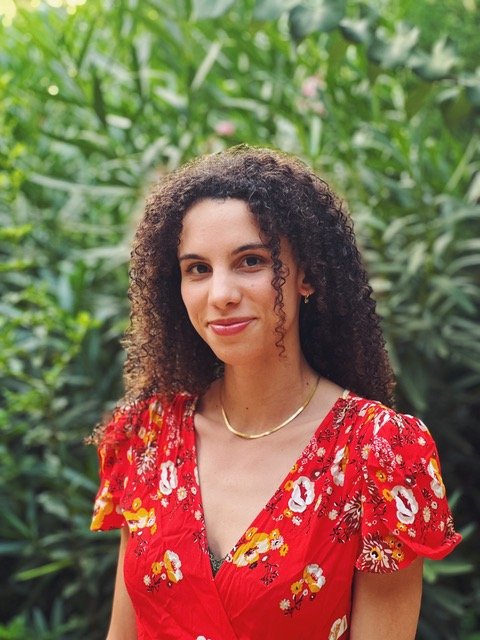
Credit: Francois-Bernard Poulin
Once a book is out in the world, readers will attach their own meanings to the story. That being said, what’s one thing you hope readers of Honey take from it?
Imani: There are really no thoughts I want to prescribe in Honey - aside from the fact that murdering men is not actually feminism. It’s not a novel of grand storylines and neat conclusions, and while this can frustrating to readers, I want them to have their own space in the story.