One Voice Could Be So Loud: Stories of Protest, Purpose, and Passion
An Introduction
By: Rich Duncan Jr.
The best way to start what I hope will be a recurring feature is with honesty. I’m not a genre historian or any kind of expert when it comes to artists using their work as a vehicle for protest or resistance. I’m not a seasoned essayist or nonfiction writer, though the basis of this article is my first professional nonfiction credit. I’m just a writer captivated by the way others use the raw power of creativity to tell the stories that fuel them or offer commentary on the world that shapes them. As half of the Ink Heist podcast duo, my favorite part of our conversations with the artists we invite on the show is hearing about their process and background. Those are the moments where our guests usually come alive and you can hear the passion they have, not just for their own stories, but the act of creativity itself.
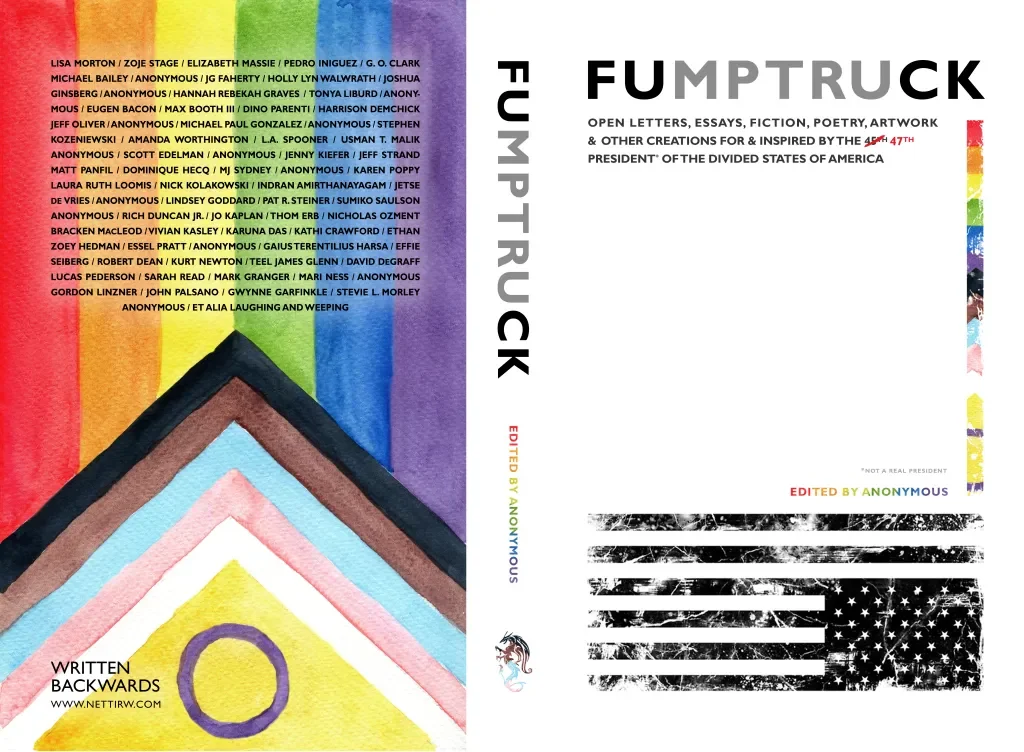
It reminds me a little bit of my favorite craft book, Josh Malerman’s Watching the Evil Dead: Unearthing the Radiant Artist Within. It’s part memoir, part craft book, but the part that appeals to me the most is it’s part love story. It’s a love letter not just to his wife Allison, but the act of writing and creativity itself. Josh Malerman is a human live-wire, the type of person whose energy and passion for the work of writing is enough to fuel a legion of creatives. Through conversations on the Ink Heist podcast and reading this book, it’s safe to say his energy has fueled me countless times when I needed it most. His views on the act of creating make you think anything’s possible, that the only real barrier to what you can achieve is the limits you place on yourself or the doubts you let creep in. It’s this boundless positivity that led me to step outside of my comfort zone and write my first ever published nonfiction piece, the article “Mind Cemetery” which appeared in FUMPTRUCK: Open Letters, Essays, Fiction, Poetry, Artwork & Other Creations Inspired by the 47th President* of the Divided States of America.
Shortly after the elections in November of 2024, I remember stumbling across an open call soliciting any style of creative works for publication in an anthology released by Written Backwards to protest the second term of Donald J. Trump. It was just the sign I needed. I felt such a sense of despair after witnessing the outcome of that election. Millions of Americans decided that despite his 34 felonies and two impeachments, Donald J. Trump was the person that should be leading the country. Almost immediately, his followers were running to social media and bombarding women with hateful messages like “Your body, my choice!” and a slew of others that tested my faith in humanity. I’m a husband, father, and son and seeing the discourse that flooded the internet filled me with a rage that made me feel powerless. This open call, however, helped me find a purpose and an outlet for that rage. It reminded me that despite that feeling of powerlessness, that I have a skillset that no one can take from me - the written word and my voice.
I tapped into something personal and raw to write that essay; taking a real inventory of my values for perhaps the first time in my life. So many times writers have said that the best pieces of writing come from pouring your heart out onto the page and that’s what I did with “Mind Cemetery”. I felt an immense sense of pride when it was finished and accepted for publication not just because I was able to grapple with my emotions over what this election meant for my daughter and women all over America’s future, but it allowed me to make a public stand against the hatred this administration stands for and encourages.
But even more than my own personal validation, I was proud to be a part of this project because of what it represented. I don’t want to list names because I don’t want to leave anyone out, but once the open call for FUMPTRUCK was over, it contained some of the biggest names in the Horror genre and speculative fiction space. As someone who has always gravitated toward the world of DIY and underground art, moments like this were the reason why. A bunch of creatives felt disillusioned and angry and instead of just wallowing in it, we all banded together to express ourselves as individuals, and in the process, created a collaborative piece of work that stood for something.
Artists have always used their work to speak out against injustice or offer critical commentary throughout recorded history. Even when they operated under a patronage system, Renaissance artists were able to critique political figures and societal structures through subtle choices and depictions. The purpose of art is self-expression for an artist, sure, but there is also the hope that work will elicit an emotion in those who experience it. A dialogue between audience and creator, where not only are ideas and messages shared, but emotion and connection.
As someone who hails from the East Coast - particularly the suburbs of Philadelphia - I have a certain type of personality, especially when it comes to witnessing injustice. People from the Philadelphia area tend to get a bad wrap - we’re loud, we’re abrasive, we throw snowballs at Santa Claus. While those things can be true, I view it as being passionate. We’re the type of people who will be loud, who will be abrasive, and we will absolutely call you out and stand up for those who are being bullied or oppressed. It doesn’t matter if you’re the President of the United States or some random person down the street, if you want to attack people who are different from you, don’t expect a mild “Okay, we can have a difference of opinion.” No, basic decency and human rights for all is not an opinion and you can instead expect a very blunt and direct condemnation of your ignorance.
I think that mentality is also why I’m drawn to punk rock, hardcore, and Horror fiction. These art forms make no apologies for being raw, direct, and at times confrontational and the creators within them strive to tear down the barriers between creators and their audience. That’s what makes these art forms such powerful vehicles for creators who have something to say. Classic horror novels like Frankenstein, Dracula, or Carmilla all tackled societal issues of the time periods in which they were written and their influence has been well-documented. Instead of visiting the past, I’d like to examine more contemporary works and authors. There are many reasons for this. The first being that academics far more intelligent than myself have already covered the classics. The other reason is it just feels right to focus on some of the writers currently working in a time where it seems like basic human rights are being threatened, people are being persecuted for being their authentic selves, and book bans are threatened on a daily basis.
There’s so many great examples and there’s no way for me to include every book and writer, but there are a few that I’ve read and loved that I wanted to highlight. The first is Alma Katsu’s novel The Fervor, which blends elements of Japanese folklore and the supernatural with the real-life brutality of the Japanese American internment camps during World War II. It’s a terrifying novel not just because of the supernatural elements - which are masterfully done - but because it depicts how easily humanity can slip into hatred for one another. The novel was written during a time of heightened violence against Asian Americans due to xenophobic comments that tried to blame them for the spread of COVID. Included at the end of The Fervor is a passionate and moving Afterword from Katsu that details not only the historical cases of violence against Asians, but her own personal connections to the events that shaped the novel.
It not only shines a light on a moment in history that is woefully under discussed, but also serves as a warning that the self-deception and hateful rhetoric that led to these events is still raging in America. The Fervor may have been released in 2022, but it’s still highly relevant today. The current administration is using the same tactics and rhetoric to indiscriminately round up Americans and immigrants based on their country of origin and detain them in similar internment camps or ship them to random countries that promise to house them in inhumane conditions. And just like some of the characters in The Fervor, there is a section of Americans that cheer these actions on with glee. Which is why books like these are so important, to remind us of the mistakes of our past and to use our voices to speak up against injustice.
Tananarive Due’s stunning The Reformatory is also a perfect example of using Horror as a vehicle to shine a light on real-life atrocities and to speak out against the ideologies that allow them to take place. The Reformatory is a fictionalized account of the horrific history of the Arthur G. Dozier School for Boys, which was in operation from 1900 to 2011. In the novel, 12-year-old protagonist Robert Stephens Jr. must team up with ghosts to survive the atrocities of the Dozier School in 1950’s Jim Crow Florida. Due uses her own family's connection to the school as well as interviews with survivors, journalists and other important figures in uncovering the school's horrific past to craft a novel that everyone should read. It’s no surprise it took home both the Bram Stoker Award for Best Novel and the World Fantasy Award for Best Novel in 2024, it’s an important book from one of the most powerful voices in the genre that deserves significantly more praise.
Another reason the topic of artists using their work to highlight societal issues interests me is because it opens doors to topics that may be under-represented or reported on. The Reformatory is a perfect example. Throughout the 111 years it was open, the school was notorious for abuse, beatings, rapes, torture and murder of the children placed into the school. Almost immediately after its opening, there were rumors of the torture being carried out there and numerous investigations documented the abuses and yet they were allowed to operate until 2011. It was a gross violation of justice and had it not been for The Reformatory, I might not have ever heard about the horrible crimes committed there and I have a feeling I’m not alone.
Similarly, Nick Medina’s novel Sisters of the Lost Nation explores issues of racism, identity, and the Missing and Murdered Indigenous Women and Girls epidemic. Indigenous women are between 3 and 3 ½ times more likely to be victims of violence than any other demographic of women and often their cases become cold cases due to systematic racism and bias. It’s a startling issue and there needs to be reform on how these types of cases are handled. Thanks to the efforts of writers like Katsu, Due and Medina - just to name a few - important societal issues such as the ones outlined above are able to be brought into the light and may be introduced to readers who may otherwise be unaware of them.
However, outside of books utilizing real world events, there are so many other ways Horror writers are using their voices to push back against injustice and prejudice. One of my favorite writers operating in the genre today is Eric LaRocca. LaRocca mentioned in an article for Seize the Press, “Disaster Queers and the Troglodytes Who Mean Them Harm”, that as he started writing, he wanted his work to represent queer characters in a more direct way than the works he was exposed to. He also goes on to say that there isn’t always a need for “positive” queer representation in media and that writers shouldn’t be afraid to portray messy, problematic queer characters. That’s one of the things that appeals to me most about LaRocca’s writing. He’s not afraid to write messy characters and push the envelope when it comes to their personalities. He seems to revel in darkness and chaos and that unflinching willingness to go there are what make his books some of the most exciting in the genre and keep me coming back time and again without even reading a synopsis.
Another development that I’ve loved is the amount of BIPOC and LGBTQIA+ writers who’ve written cosmic horror novels that reinvent the genre and improve the mythos that H.P. Lovecraft created. By now, everyone knows the problematic history of H.P. Lovecraft as a person, but there’s no denying the impact his mythos has on the genre. I won’t pretend to speak for the writers’ motivations, but seeing writers from backgrounds that H.P. Lovecraft may have disparaged creating stories using his mythos is an act of defiance just by their creation. I think of brilliant works like The Ballad of Black Tom by Victor LaValle or The Worm and His Kings series by Hailey Piper.
Another one of my favorite writers is Gabino Iglesias, who writes stories that straddle the worlds of noir and horror that are unflinching in their portrayals of violence and the darkness that’s found in the world. I love Iglesias’ decision to forgo italics when using Spanish or Spanglish, a tool in publishing that indicates an “otherness” to a language. I love that he’s authentically himself and isn’t afraid of using politics, Spanish and Spanglish without a translation, or any other move that the publishing industry will try to tell you will “hurt sales”. Iglesias is very much a “this is who I am, take it or leave it” type of writer whose only obligation is to himself and the stories he tells, not sales or anything else that comes with being a part of the publishing machine. That’s the kind of energy publishing needs and an energy I very much identify with and am inspired by.
We need writers that are unafraid to confront the darkness of the world around us, especially in a time when people are having their rights stripped away on a daily basis and people in positions of power are trying to control the information we have access to with paper thin excuses to try and ban books they don’t agree with. We need writers of all genres, but I’ve always felt an affinity for Horror which I’ve always likened to punk, hardcore, and metal. All of these genres are seen as “outsider” art forms and have a long history of standing up to authority and being attacked by those who don’t understand them.
This brings me back to my experience participating in the FUMPTRUCK anthology and the importance of people using their voices to stand up against injustice. It’s easy to get lost in the feeling of, “I’m just one person, what am I going to do?” But that’s how all great movements start, individual people having the strength and conviction to speak out for their beliefs. There’s a lot of power in those individual voices and experiences, but when they come together? That’s when magic happens. That’s when it becomes a lot more difficult for authoritarian regimes or those who thrive on hatred to stifle creativity, stifle truth, and stifle progress. I asked writers for their thoughts on art as a protest form and these are their unedited responses.
Stephanie Ellis, author of Harrowfield, The Barricade, Bottled
“Does art play a part in protest? Absolutely, look around the world and see how many are imprisoned because they have used their medium – be it poetry, song, performance – to protest against those in power. And read that again: imprisoned. Only those who are considered a danger are treated like this, removed from society to prevent their ideas spreading. Look at English PEN - and its sister organisations - highlighting writers who are treated in this manner, raising awareness, establishing communications so that they are forgotten. The more totalitarian a regime, the more those who seek to challenge it are incarcerated (or worse).
Artists can also explore the consequences of actions taken, show a society that might materialise if we don’t take heed. 1984 anyone? Couldn’t happen they said, and we’re not far off the end result of that book with barely a whimper. The onslaught against the autonomy of the female body is shown in The Handmaid’s Tale. Fahrenheit 451 and the demonisation of books – think those now being pulled off shelves in the US.
Creatives allow ideas to be shared with the populace at large, in a way that can be digested and absorbed, in a manner that political statements can’t. So many turn away from politics, but art can reach those hearts and minds which prefer not to engage. The power of a poem, a stirring song which becomes an earworm. Art reaches those parts politics can’t touch and reminds us all what it is to be human – and what is needed to remain so.”
Shane Douglas Keene, author and poet of Moth Frenzy and Lilith’s Rising and Mason Gorey (with Stephanie Ellis):
“Art—across the board, I think—has always been the first line of both defense and aggression. I can only speak for myself as far as responsibility goes, but I believe we as authors, musicians, actors, visual artists, are obligated to bare the root rebellion in our souls, that which makes us creators. I think those with the courage to make art are already demonstrating a willingness to speak out, and letting that renegade spirit shine in your work is the best way to shine light on a shitty situation.”
John C. Foster, author of Final Boys, The Hard Six, Hate House:
“I often set stories in New York, and my lived experience creates a diverse array of characters, latino, white, gay, Spanish speaking, Arabic speaking…that’s what I see every day. When I wrote The Hard Six during Trump’s first run, I remember that creating the character of Tooth, an older gay, black man who becomes a father figure, was both natural for the story and an act of defiance. Or better, assertion—people like Tooth exist and in this case, play a vital role.”